Q&A With Darin Dell, DVM, DACVD
Discover the benefits of long-acting injectable antibiotics in veterinary dermatology and the importance of client communication for effective treatment in this interview with Darin Dell, DVM, DACVD.
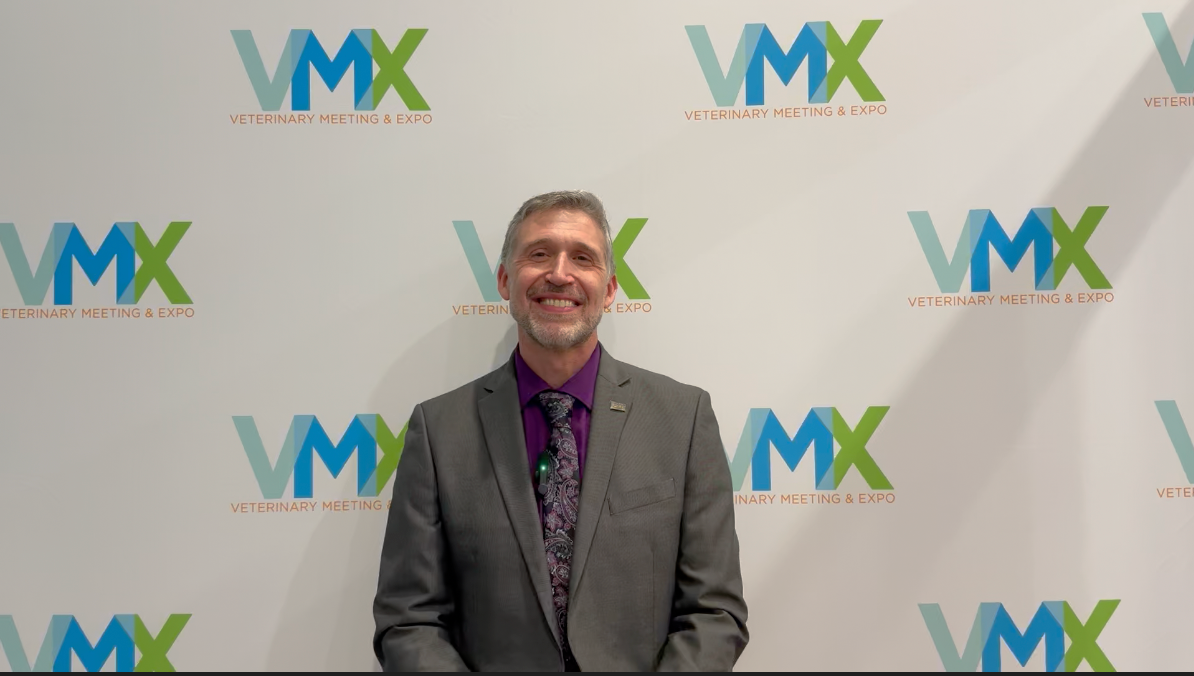
When it comes to treating dermatology patients—or any veterinary patient—the most effective treatment plan is one a pet owner can actually follow. In this interview at the 2026 Veterinary Meeting & Expo in Orlando, Florida, Darin Dell, DVM, DACVD, discusses the clinical advantages of long-acting injectable antibiotics like Solovecin, a cefovecin sodium injectable; the necessity of a multimodal approach to combat antimicrobial resistance; and why the most important tool in a veterinarian’s kit might actually be an honest, judgment-free conversation with the client.
Transcript has been edited lightly for clarity
dvm360: What are the primary clinical advantages of using Solovecin in a veterinary dermatology treatment plan?
Dell: That's a good question. The really big advantage is that you make sure that the owner can be [adherent] with antimicrobial therapy, right? So when we give an owner an oral capsule, a pill, or a liquid, we're really counting on them to not only remember but also effectively administer that medication. Sometimes that's hard, right? People always start with that. By using an injection like Solovecin, it gets done. There's no at-home stress with the client, and then we can judge response to the drug rather than judging response to the owner's ability to give it and the dog's ability to take it.
dvm360: Why is a multimodal approach recommended when prescribing a systemic antibiotic?
Dell: It's really important for us to use [a] multimodal approach so we can reduce the risk of antibiotic resistance. It also shortens our treatment time, and it gets people on a better path for long-term management, because we really want to use that systemic antimicrobial short term to treat an infection, and use the antimicrobial topical therapy during that time to help, again, eliminate the chance of resistance, or reduce the chance of resistance, and then become their long-term prevention partner.
dvm360: During your lecture, you talk about a patient of yours named Baby Girl. Would you share more on her story?
Dell: Yes, that would be great. I love the Baby Girl story because it's really an example of what we see all the time, or what I see all the time, and I know what general practitioners see in practice. [General partitioners have] done a good job; [they’ve] done the work [they’re] supposed to do, and still, [they're] stuck [on] how [to] actually medicate this pet. Now I know it needs to be done, but it has to happen, right? Unfortunately, infection itself is super pruritic and uncomfortable. Don't forget, some of these dogs are really painful from infection.
So with Baby Girl, the primary care veterinarian had prescribed a once-daily antibiotic. They had done some antipruritic medications, but the owner was really struggling because she couldn't do those things at home. She was actually…distressed by this. She really wanted to do better for her dog. So by talking to her and just understanding what her needs were and what she was capable of doing with her dog, we were able to change that situation.
By using an injectable antibiotic, we got rid of that hindrance to getting the infection cleared, which made the dog feel better. Then, by using a pain medication to help the owner actually use topical therapy, we established a new bond and a new routine. The dog won't always need pain medication to get its feet cleaned and to do topical therapy, but in that little bit of time, it was super important. It's no difference than if you were trying to train out some other bad behavior or anxiety. We're just trying to train a good behavior that's going to help the pet and the owner for the rest of the dog's life.
dvm360: How is Baby Girl doing now?
Dell: Doing great. The owner is super thrilled. The dog’s feeling normal. Our plan is to check her in a few weeks and see. [The] weather in Colorado is kind of strange because it's super warm, so [I’m] not really sure what the seasons are going to bring [or whether] we're going to see a difference.
dvm360: What is something you hope attendees take away from your lecture?
Dell: The big ones are…don't use a systemic antibiotic unless you're sure that you need it. I know some of us were taught at school, “Well, I'm going to cover it with antibiotics,” or “I think it needs an antibiotic.” Do your physical exam. Do cytology. If there's no proof that you need it, don't do it. That's the biggest thing we can all do to help prevent antibiotic resistance. That's No. 1.
No. 2 would be to always combine it unless it's absolutely not possible to combine your systemic antibiotic therapy with a topical antimicrobial, whether that's a shampoo, a spray, a wipe, a mousse—whatever it is. Find what the owner can do, because it's going to be better for you, better for the owner, and better for the pet long term.
dvm360: Is there anything else you would like to add about your lecture?
Dell: I think the biggest thing is just trying to have that conversation with clients. Sometimes it's awkward to ask them, “Will you do this at home?” because we're really taught to focus on the medicine and explain “This is why it's important, and this is what's happening.” We're not really taught in school to have that conversation and say, “Can you do this? It's OK if you [can’t].”
Like we talked before about caregiver burden, it's distressing for clients when they can't do it. And some of them just don't say it. So in order to have that conversation, just openly say, “Yes, this is a problem for you. How can I help you with that?” Opening that conversation so the owner feels comfortable telling you things is super important, and that's how you get better results. Because then they can do something they're capable of. You can know what the results are at the end, and then the dog feels better.