Senior pet socialization: Supporting social health in aging dogs and cats
Human medical research shows that positive social connections help people live healthier, happier, longer lives. Is the same true for dogs and cats?
Social health matters for people and pets
To make up for a missed workout, I call my sister or meet a friend for tea. Why? Research reassures me that happy relationships and good social connections predict healthy aging and longevity in people better than physical activity, genetics, and socioeconomic status does. Plus, did you know that social isolation and chronic loneliness are human health risk factors that rival those of smoking, alcoholism, and obesity?1-5
Вероника Зеленина/stock.adobe.com
Veterinarians recognize that puppy and kitten socialization helps prevent undesirable fear-related behaviors in adult dogs and cats, and that ongoing positive training and environmental enrichment support pets’ well-being throughout their lives.6 However, fewer studies have dug deeper into pets’ social fitness, especially in senior dogs and cats.
Initial good news comes from the Dog Aging Project, which shows that positive social interaction with people and other animals promotes dogs’ healthy aging, and that it has a 5 times greater beneficial impact on dogs’ health than their owners’ finances.7 Other studies likewise describe health and well-being benefits for pet and shelter cats who receive positive human social interaction.8-10
Taken together, this information spotlights opportunities for veterinarians to address social engagement as an important component of senior dogs’ and cats’ physical and emotional health.
Aging alters pets’ social needs
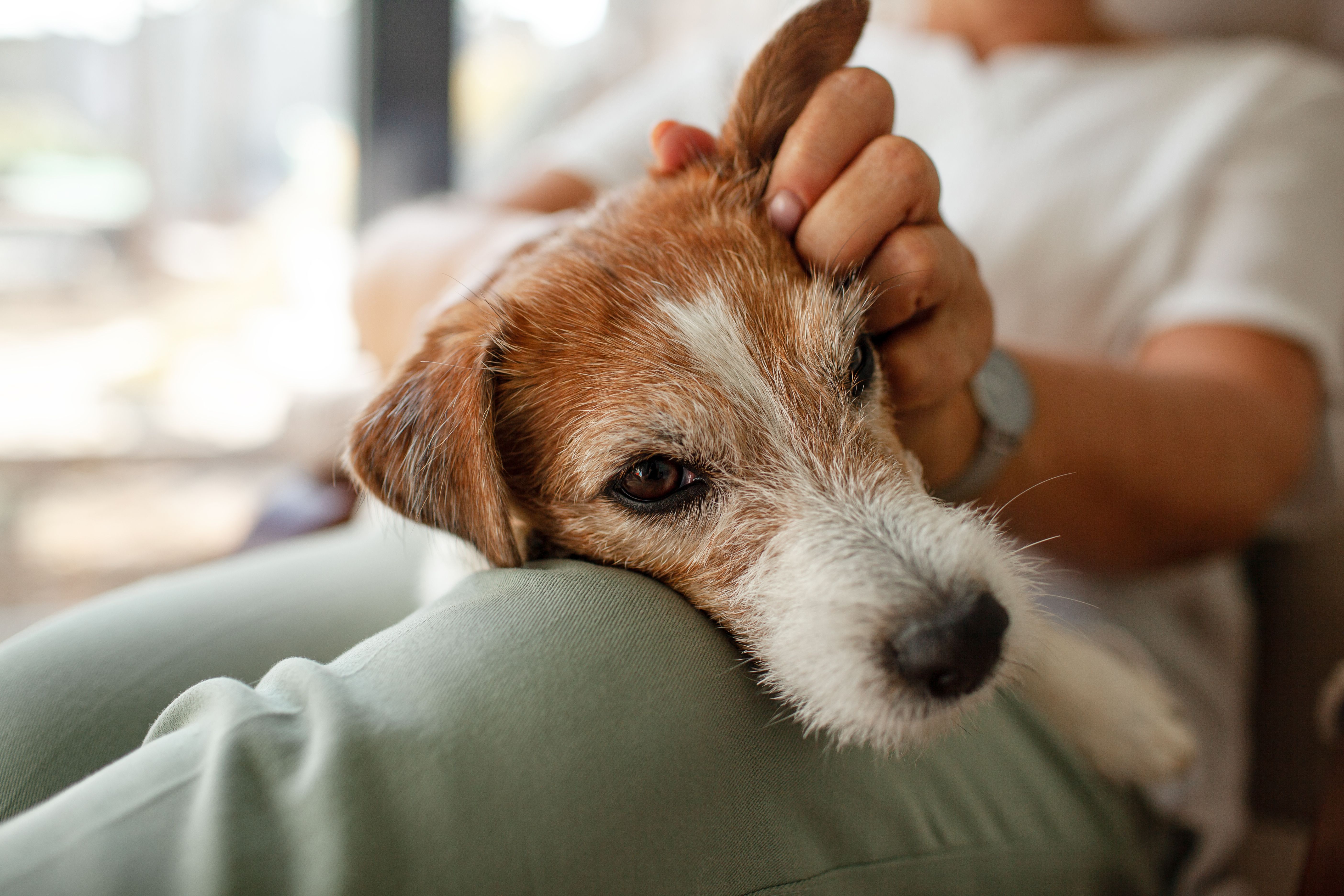
Physiologic changes that accompany adult dogs’ and cats’ later life stages often result in diminished sensory capabilities, reduced muscle strength, and less energy. Add to that the increased likelihood of a chronic illness or 2 surfacing, and such decline can make senior pets less inclined to participate in activities they previously enjoyed. They may become anxious and clingy or may avoid household activities. Senior pets may no longer tolerate boisterous or novel situations, exuberant play, or strenuous exercise. Senior dogs and cats tend to rely on familiar routines, people, places, activities, and other pets.
Senior pets’ social fitness is at risk when clients say that their pets are “just old” and “don’t want or need to do much anymore.”Help clients understand that if their grey-muzzle dogs are grumpy and their crusty cats are cranky, behavior changes in senior pets are often adaptive responses to their aging physiology, and that medical care and social interaction remain important. Patient management includes helping clients realistically acknowledge their senior pets’ limitations along with their medical, environmental, and social needs.11
Senior pet socialization suggestions for clients
Educate clients on the environmental and social interaction adjustments appropriate for their senior pets and households. Take a minute to talk with clients about the importance of their senior pets staying connected with the family and maintaining routines with favorite people, albeit in perhaps different ways, such pet strollers or wagons vs. neighborhood leash walks, and without introducing negative experiences. Conversation-starter questions might be, “Describe your pet’s social interactions,” or “How would you rate your pet’s social fitness?”
When my clients say, “I feel bad that I can’t take my dog hiking anymore” (and after I’ve identified and addressed their dog’s medical issues), I suggest a shorter trek around the block, a “sniffari” in the yard, using a pet wagon or stroller, or rolling a ball indoors. Mild range-of-motion movement, light massage, or simple brushing often suffices, depending on the pet’s health and temperament. Many of those suggestions are also appropriate for clients in maintaining social interactions with senior cats.
Most cats like predictability and routine, and they may experience chronic stress after a major or sudden household change. Clients who have senior cats should aim for predictable interactions with preferred people and pets and allow their cats to choose whether to seek solitude or stay close. Cats need access to vertical spaces so they can observe vs. engage. I advise clients not to force their cats to interact, especially with unfamiliar or rambunctious visitors. Quiet, no-conflict social interactions and predictable daily check-ins with their preferred humans are key for senior cats.
Clients sometimes ask me whether they should get a new puppy or kitten to help keep their senior pet company. Depending on the pet and their history, exposing a senior pet to novel situations or new pet housemates to try to rekindle their youthful energy may work in some cases, and as long as they’re not forced interactions. I assess the situation, offer abundant caution, and no guarantee of success.
Let clients know how to alleviate and avoid stress in their senior pets. Over socialization “for their pets’ own good” (whether it be car rides, dog parks, swimming pools, play dates, visitors) and forced novelty can create stress. When clients have an unrealistic view of their senior pet’s abilities or refute the need for medical intervention, like analgesia, their pet may miss out on activities and social interactions they would otherwise enjoy and benefit from.11
Remind clients that pets who withdraw from activities need medical assessment, and to not ignore painful conditions such as arthritis or sensory loss as possible causes of their pets’ reduced interactions. Managing pain and providing the proper medical support help pets feel better and more inclined to remain socially engaged.
Veterinarians can lead senior patient-centered client conversations with confidence and compassion, while still considering and addressing the family’s resources and needs. Have earlier and ongoing quality-of-life conversations with clients as their pets enter and traverse their senior years. Gently discuss palliative and hospice care options when (and preferably before, whenever possible) those needs surface.
Social withdrawal can be a red flag
Physical or emotional decline or discomfort can make senior pets seek more solitude or become irritable or aggressive. When senior dogs and cats exhibit new undesirable behaviors (identify these based on the client’s presenting complaint and the patient’s history, including behavioral screening questions), first rule out and manage medical conditions like arthritis, cancer, kidney disease, cognitive dysfunction, heart disease, thyroid dysfunction, and cachexia or age-related issues, like sensory decline and sarcopenia, that contribute to behavioral changes.
Recognize and manage senior pets’ physiologic aging changes in conjunction with treatment for other age-related medical conditions they have. Also address patients’ pain, anxiety, and other distress such as nausea.
Aging with dignity, not in isolation
Reframe clients’ expectations regarding their dog’s ability to participate at a dog park or in wrestling games, or their cat’s ability to engage with other house pets or family members during chase play. Encourage clients to allow their senior pets choice, predictability, and to be seen and included in gentler ways. These may include simply sitting near the family in a safe space instead of being isolated in a different room, providing opportunities for short, positive interactions over long periods of stimulation, and one-on-one time instead of whole-household horseplay. Reassure clients that social health means helping their senior pets feel safe and that quiet company counts. Comforting companionship could include clients simply watching snippets of wildlife videos designed for cats with their cats.
The quality of senior pets’ social connections and interactions matter more than the quantity of the experiences. And of course, clients should not yell, use physical punishment. or otherwise interact negatively with their pets. Remind clients that senior pets who prefer quiet participation doesn’t mean that they want less love and reassuring attention. I tell clients, “Your pet may appreciate calm greetings over exuberant homecomings,” and “Being nearby can be enough for your cat,” and “Connecting with your dog doesn’t always require rowdy play.”
The riches of social enrichment
Just as pets’ medical issues benefit from pharmacologic and other therapeutic interventions, senior pets who have declining socialization abilities still benefit from positive, lower-key social interactions. Social engagement is an integral component of pets’ environmental enrichment in all life stages. Just as some veterinary practices offer puppy and kitten classes or promote “pet happy visits” solely for treats and socialization, practices may also offer senior canine and feline socialization classes or client “senior pet life skills’ educational programs. Fostering healthy pet-caregiver relationships remains important for senior pets.
A full-circle health reward of helping our senior pets remain socially engaged: when we can’t get to the gym, or when our human friends have full schedules, we know that hanging out with our dogs and cats likewise boosts our physical and mental health.12 Positive social relationships between people and their pets are healthy for pets, and they’re healthy for people, too.
References
- Berkman LF, Syme SL. Social networks, host resistance, and mortality: a nine-year follow-up study of Alameda County residents. Am J Epidemiol. 1979;109(2):186-204. doi:10.1093/oxfordjournals.aje.a112674
- Holt-Lunstad J, Smith TB, Baker M, Harris T, Stephenson D. Loneliness and social isolation as risk factors for mortality: a meta-analytic review. Perspect Psychol Sci. 2015;10(2):227-237. doi:10.1177/1745691614568352
- Harvard Second Generation Publications. Harvard Study of Adult Development. Accessed January 26, 2026. https://www.adultdevelopmentstudy.org/publications
- Woodward EN, Walsh JL, Senn TE, Carey MP. Positive social interaction offsets impact of low socioeconomic status on stress. J Natl Med Assoc. 2018;110(4):371-377. doi:10.1016/j.jnma.2017.07.006
- Martino J, Pegg J, Frates EP. The connection prescription: using the power of social interactions and the deep desire for connectedness to empower health and wellness. Am J Lifestyle Med. 2017;11(6):466-475. doi:10.1177/1559827615608788
- American Veterinary Medical Association. Literature Review on the Welfare Implications of Socialization of Puppies and Kittens. September 10, 2024. Accessed January 27, 2026. https://www.avma.org/sites/default/files/2024-09/avma-lit-review-socialization-puppies-kittens-0924.pdf
- McCoy BM, Brassington L, Jin K, et al. Social determinants of health and disease in companion dogs: a cohort study from the Dog Aging Project. Evol Med Public Health. 2023;11(1):187-201. doi:10.1093/emph/eoad011
- Oh WS, Armstrong PJ, Han HJ. Lifestyle factors affecting aging and healthspan in dogs and cats. J Vet Sci. 2025;26(suppl 1):S220-S245. doi:10.4142/jvs.25227
- Vitale Shreve KR, Mehrkam LR, Udell MAR. Social interaction, food, scent or toys? A formal assessment of domestic pet and shelter cat (Felis silvestris catus) preferences. Behav Processes. 2017;141(pt 3):322-328. doi:10.1016/j.beproc.2017.03.016
- Nagasawa T, Kimura Y, Masuda K, Uchiyama H. Physiological assessment of the health and welfare of domestic cats—an exploration of factors affecting urinary cortisol and oxytocin. Animals (Basel). 2022;12(23):3330. doi:10.3390/ani12233330
- Moniot D, Allaway D, Bermingham E, et al. Aging is modifiable: current perspectives on healthy aging in companion dogs and cats. J Am Vet Med Assoc. 2025;264(2):234-241. doi:10.2460/javma.25.06.0412
- Human Animal Bond Research Institute. Research resources. Accessed January 29, 2026. https://habri.org/research/