Researchers answer top questions on the hemangiosarcoma VOC study
Lead researchers at Penn Vet explain how the samples were handled, what the dogs’ roughly 70% accuracy means for clinicians, and the next steps needed to translate the finding into a clinical test.
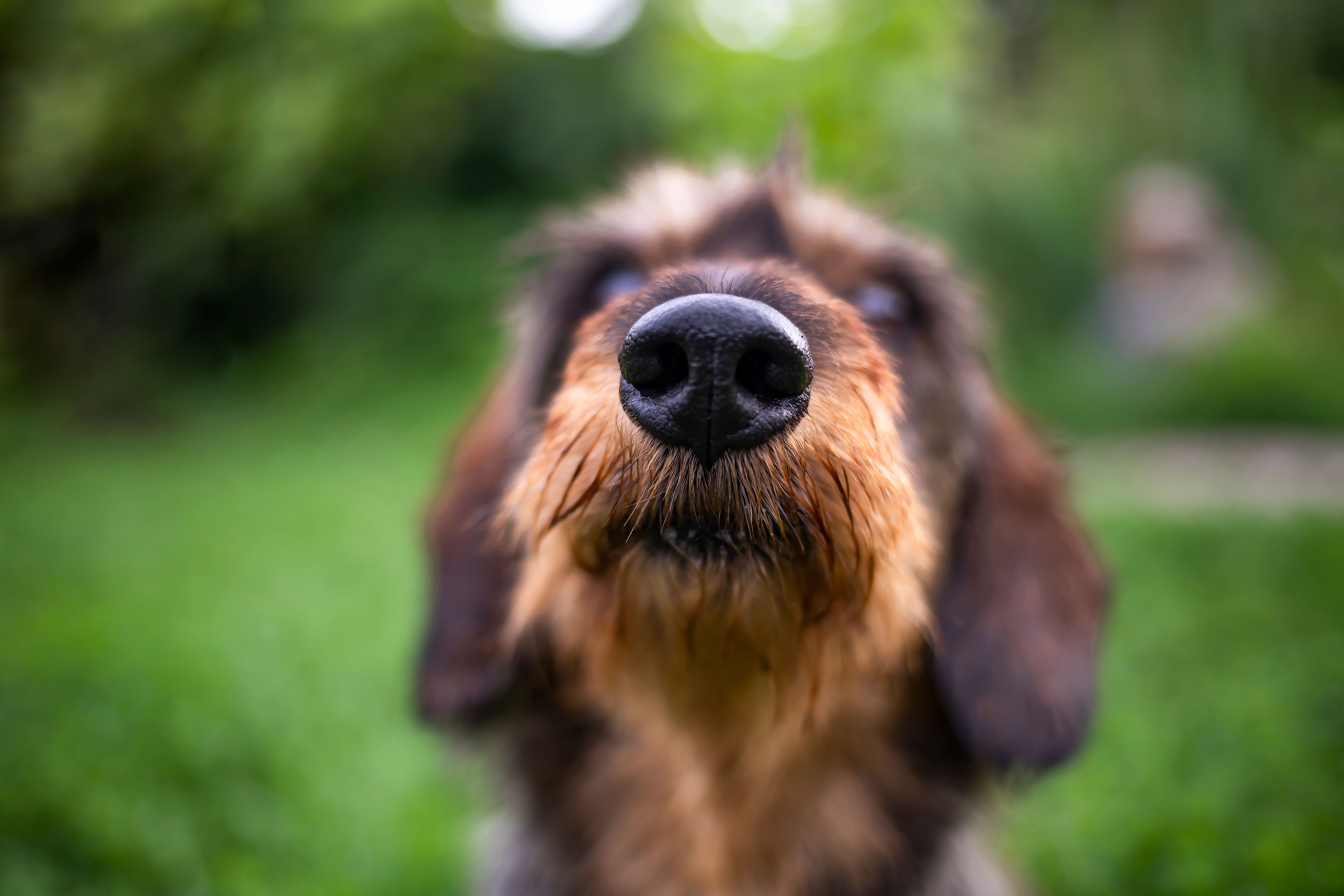
Can dogs truly sniff out hemangiosarcoma (HSA)? We sat down with 2 researchers on the team behind a recent study in The Veterinary Journal—Cynthia M. Otto, DVM, PhD, DACVECC, DACVSMR, and Clara Wilson, postdoctoral research fellow at Penn Vet’s Working Dog Center—to get the story behind the data. Following up on our preliminary coverage, this Q&A tackles the practical aspects of their research, such as how to handle samples, what that 70% accuracy really means, and how close we are to a viable clinical test.1-2
Can you describe exactly how serum samples were collected, processed, and stored, and how sensitive the detection signal is to preanalytic variables such as hemolysis, time to freezing, or storage temperature?
Otto/Wilson: Samples were collected during routine veterinary visits across 4 sites/biobanks and stored at −80 °C, with no more than 2 freeze-thaw cycles. For testing, 100 µL of serum was aliquoted into vials, and [the] dogs evaluated the headspace volatiles via an automated olfactometer. We did not directly test preanalytic variables such as hemolysis, time to freezing, or minor temperature deviations. One advantage of the dogs is their remarkable ability to cut through background noise and focus on the biologically relevant signal, whereas analytical instruments such as GC-MS [gas chromatography mass spectrometry] can struggle with complex, noisy volatile organic compound [VOC] mixtures. Understanding how preanalytic factors influence those signals is therefore of strong interest to us as we work toward recreating this detection using an electronic nose [e-nose] or chemical analysis methods.
Do you have any data or hypotheses about the specific VOCs or chemical classes responsible for the dogs’ alerts?
Otto/Wilson: Specific VOCs were not identified in this study. However, we have recently funded new work through the Morris Animal Foundation, in collaboration with Texas Tech University, to analyze these serum samples and define which VOCs are associated with [HSA] and are distinct from both healthy dogs and dogs with other diseases. That work has just begun and is a key next step.
How should clinicians interpret the roughly 70% accuracy observed in this study in terms of potential clinical use? What sensitivity and specificity thresholds would you consider appropriate for a screening or adjunct test for HSA in practice?
Otto/Wilson: The dogs are not being proposed as the final clinical tool, so the 70% accuracy should not be interpreted as defining clinical performance thresholds for a future blood test or e-nose device. Those sensitivity and specificity targets will be determined as the technology develops. The core question addressed here was whether HSA produces a recognizable VOC profile at all, and the dogs’ performance, well above chance, demonstrates that it does. That said, we currently don’t have a diagnostic test for HSA, and the potential for accuracy as high as 70% would be incredibly valuable.
What were the biggest limitations you encountered, especially regarding the number and diversity of HSA cases, tumor sites or stages, and control selection, and how will you address those issues in follow-up studies?
Otto/Wilson: Limitations included limited breed diversity, challenges in tightly matching samples for age, and difficulty accumulating appropriate splenic disease controls for HSA. Our next phase of work focuses on direct VOC analysis using [GC-MS] and solid-phase microextraction, and we are very interested to see what patterns emerge. Replication by other groups with larger data sets is always important, but we believe our matched triad design, double-blind testing, and use of analytical models to avoid inflated results provide a promising foundation.
What is the envisioned pathway to translate this proof of concept into a reproducible, clinic-ready assay or sensor? What validation steps, sample sizes, regulatory considerations, or industry partnerships do you see as necessary next steps, and on what timeline?
Otto/Wilson: The next critical step is defining the specific VOCs and chemical patterns associated with HSA. After this, we can look to validating them across larger, independent cohorts. Only after these steps have been taken can [the] development of a reproducible sensor or assay move forward. We envision translation into a commercial, clinic-ready test as a longer-term process that will require substantial validation, regulatory planning, and likely industry partnerships rather than a rapid transition.
Overall, our goal with this work was to provide preliminary evidence that VOCs may represent meaningful biomarkers for the detection of canine cancer.
For transparency, it should be known that I am a founding member of a company called VOC Health, which has been working on an e-nose for the [past] 8 to 10 years but hopes to start evaluating clinical samples in the near future.
References
- Wilson C, Holden S, King J, Mallikarjun A, Buis M, Otto CM. Trained dogs can detect the odor of hemangiosarcoma in canine blood samples. Vet J. Published online November 29, 2025. doi:10.1016/j.tvjl.2025.106522
- Alaburda B. Dogs can sniff out hemangiosarcoma in blood samples, early study shows. dvm360. January 27, 2026. Accessed February 4, 2026. https://www.dvm360.com/view/dogs-can-sniff-out-hemangiosarcoma-in-blood-samples-early-study-shows